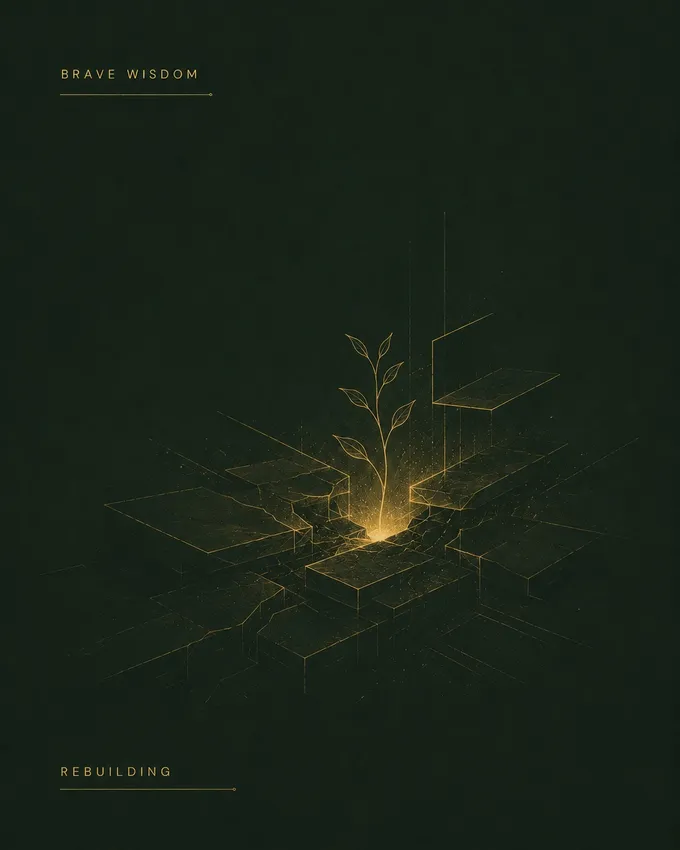
Rebuilding: Recovering the Person Beneath the Performance
Rebuilding isn’t reinvention, and the difference matters more than it sounds like it should. Reinvention can quietly become another performance. A new costume, a new image, a new way of being admired that just happens to look healthier or wiser than the old one. You walk away from one false version of yourself and, without meaning to, build another.
What Brave Wisdom is actually after isn’t a new image. It’s recovering what was already true underneath the role you’ve been playing. The voice you quieted to stay useful. The desire you learned to dismiss because it was inconvenient. The calling that got buried under years of doing what was expected, because that felt safer than becoming whole.
You don’t need a better performance. You need a truer life.
That’s where rebuilding actually starts. Not with some dramatic reinvention, but with paying attention to what’s still alive underneath the exhaustion. You start asking a different question than the one you’ve been running on. Not “what should I do next,” but “who am I beneath what I do.”
That question is uncomfortable if you’ve spent years being good at your role, because performance hands you a very clear identity. You know what people expect. You know how to be useful, how to carry weight, how to be the person everyone can count on. So when healing starts, a harder question rises underneath all of that competence: is this actually me, or is this who I became to stay accepted, needed, or safe?
Rebuilding happens in ordinary choices, not one big moment of insight. It’s the slow work of letting truth reshape how you actually live, one honest layer at a time. Sometimes that means asking what pace would let you stay whole instead of just functional. Sometimes it means asking where you’ve been needed by people who never actually got to know you. Sometimes it’s noticing what keeps showing up, unasked, as the thing that still feels true even when nobody’s watching. All of it is the same work, just wearing different clothes depending on which part of your life it’s touching.
That includes wisdom itself, which isn’t just information you picked up along the way. Wisdom is what suffering becomes once it’s been renewed, reflected on, and lived honestly instead of just survived. There’s a real difference between knowing something and becoming someone who can actually carry it. Plenty of people collect insight. They read, they listen, they gather language for things they haven’t lived through yet. None of that is wrong. It’s just not the same as truth going deep enough into your life to change how you see, choose, love, and lead.
Purpose tends to get reframed here too. It rarely shows up as one dramatic revelation, the sky opening with the whole plan attached. More often it emerges while you’re rebuilding, the way a shape emerges once enough of the fog clears. You notice what still fits. What keeps returning. What the performance never managed to kill off completely, no matter how long you buried it.
This is where rebuilding turns into something sacred rather than just useful. God doesn’t only meet you in the parts of your story that are easy to explain at a dinner party. He meets you in the buried places too, the ones where responsibility slowly hardened into performance and you forgot that being known matters more than being needed.
Not the old you, exactly. Not some untouched version of yourself from before pain and responsibility and survival shaped who you became. The truer you. The one who can carry honesty now without needing performance to feel worth becoming.
So sit with this slowly, because it deserves more than a quick answer: what part of you is not lost, just buried beneath the life you had to perform to survive?
It might bring grief before it brings relief. A memory of something you used to love. A truth you stopped saying out loud a long time ago. Let it sit there instead of rushing to fix it.
Rebuilding was never about proving you’re worthy of the life you want. It’s what becomes possible the moment you stop trying to prove that and just start becoming it instead, one honest layer, one truer rhythm, one braver no at a time.
That’s how a life starts becoming whole again. Not all at once. Just honestly, and then again tomorrow.